How to Choose a Private Label Intimate Care OEM: 5 Pitfalls
Avoid these 5 critical pitfalls when choosing a private label intimate care OEM — clean room production, mucosal safety & pH, compliance documentation, packaging integrity, and MOQ flexibility.
For B2B buyers sourcing private label feminine care and intimate wellness products: entering the rapidly growing feminine care market is a significant opportunity for beauty and wellness brands. However, manufacturing intimate care products is fundamentally different from facial skincare. Intimate mucosal tissue is highly sensitive, has rapid absorption capabilities, and is vulnerable to pH fluctuations and microbial contamination.
Partnering with the wrong OEM/ODM manufacturer can lead to regulatory delays, product recalls, or brand reputation damage. To ensure your private label product line succeeds in global markets, avoid these 5 critical pitfalls when evaluating OEM partners.
Who this guide is for: Brand owners, procurement managers, and product developers sourcing private label intimate care, postpartum recovery, or feminine wellness products.
Pitfall 1: Manufacturing in Standard Cosmetic Workshops Instead of Clean Rooms
The Risk
Traditional cosmetic products are typically manufactured in standard production environments. Intimate care products — especially pre-filled gel applicators, mucosal care creams, and postpartum recovery products — require near-pharmaceutical-grade sterile conditions. Standard environments carry risks of bacterial or fungal cross-contamination that can compromise product safety and shelf life.
Real-world consequence: Contaminated intimate care products can cause infections, product recalls, and irreversible brand damage.
What to Verify
- 100K-class clean workshop (ISO 8 / ISO 14644-1 certified) — air particle and microbial control
- GMP certification — Good Manufacturing Practice compliance
- ISO 22716 certification — Cosmetic GMP international standard
- Full batch traceability — from raw material to finished product
Why This Matters for Your Brand
Private label intimate care products require higher manufacturing standards than ordinary cosmetics. A GMP-certified 100K clean workshop ensures controlled airborne particle count, strict microbial monitoring, and consistent batch-to-batch quality.

Pitfall 2: Ignoring Mucosal Safety and pH Compatibility
The Risk
Formulators without clinical backgrounds often use harsh surfactants, synthetic fragrances, or inappropriate acidifiers that disrupt the vaginal microbiome — the delicate protective acidic barrier. This can cause irritation, discomfort, or long-term microbiome imbalance.
Real-world consequence: Products that irritate mucosal tissue lead to consumer complaints, returns, and negative reviews — destroying brand trust before it is built.
What to Verify
- pH range 3.8-4.5 — aligns with the physiological pH of the reproductive-age vaginal environment
- Mucosal irritation testing — CMA-accredited third-party lab, zero irritation score
- Skin irritation testing — zero irritation score
- Gentle surfactants — amino acid-based, not harsh sulfates
Note: 3.8-4.5 is the natural pH range of a healthy vaginal environment during reproductive years. The specific pH of a finished product may be fine-tuned within the 4.0-5.0 range depending on the dosage form (wash, gel, cream), but should always maintain a weakly acidic environment. While regulators do not mandate a single unified pH limit for all feminine care products, product pH is a standard quality control parameter in cosmetic manufacturing and should remain stable within the claimed range, supported by complete microbiological, heavy metal, and stability testing.
Why This Matters for Your Brand
Many OEM suppliers test only for skin irritation — because mucosal testing is more expensive and harder to pass. Suppliers who have passed mucosal testing have demonstrated a higher level of formulation expertise and safety commitment. This is a key differentiator for B2B buyers to prioritize.
The Regulatory Difference
| Product Type | Testing Required | Channel Access |
|---|---|---|
| Cosmetic-grade | Skin irritation only | General retail |
| Disinfectant-certified (Xiaozihao) | Mucosal + skin irritation, bacteriostatic efficacy | Pharmacies, clinics, postpartum centers |
Pitfall 3: Overlooking Global Regulatory Compliance and Testing Documentation
The Risk
Importing intimate care products into North America, Europe, or Southeast Asia without complete compliance documentation will result in customs holds, heavy fines, or market bans. Regulatory requirements vary by market, but the foundation is always the same: documented safety data.
Real-world consequence: Shipments held at customs = delayed product launches + financial losses.
What to Verify
- US FDA facility registration (if exporting to the US)
- Complete COA (Certificate of Analysis) per batch
- MSDS (Material Safety Data Sheet)
- Stability test reports (2+ years shelf life)
- Heavy metal screening (lead, arsenic, mercury)
- Microbiological hygiene indicators (bacteria, fungi, pathogen screening)
- Disinfectant product hygiene license (Xiaozihao) for pharmacy and clinical channels
- CMA-accredited third-party testing (or equivalent national accreditation)
Documentation Checklist for B2B Buyers
| Document | What to Verify | Why It Matters |
|---|---|---|
| COA | Batch-specific, recent date | Verifies each batch meets specifications |
| MSDS | Current, product-specific | Required for shipping and safety data |
| Stability report | 2+ years shelf life | Product must remain effective through shelf life |
| Heavy metal test | Pb ≤10, As ≤2, Hg ≤1 mg/kg | Safety for daily use |
| Mucosal irritation test | Zero irritation score | Safe for intimate application |
| Disinfectant license | Valid, current | Pharmacy and clinic channel access |
Why This Matters for Your Brand
OEM partners who provide complete compliance documentation save you months of regulatory hassle. Partial documentation = delayed market entry. Complete documentation = faster launch.
Pitfall 4: Choosing Packaging That Compromises Active Ingredients
The Risk
Intimate care products often contain sensitive bioactive ingredients — botanical extracts, peptides, probiotics, or naturally-derived active compounds. Standard screw-cap bottles can expose these ingredients to oxidation and air exposure during daily use, degrading their efficacy before the consumer finishes the product.
Real-world consequence: Products that lose efficacy mid-use lead to consumer disappointment and lost repeat purchases.
What to Verify
- Airless pump bottles — protect sensitive formulations from oxidation
- Single-dose pre-filled applicators — for gels, lubricants, and serums
- Blow-Fill-Seal (BFS) ampoules — for preservative-free sterile liquids
- Opaque or UV-protective packaging — protects light-sensitive botanical ingredients
- Proper seals — tamper-evident packaging for safety compliance
Why This Matters for Your Brand
The best formulation is worthless if packaging degrades its active ingredients before the consumer finishes the product. For private label brands, packaging is not just aesthetics — it is product preservation.
Pitfall 5: Accepting MOQ That Stifles Brand Growth
The Risk
Many large OEM factories impose minimum order quantities (MOQs) of 50,000+ units per SKU. This forces emerging brands to tie up significant capital in inventory before validating market demand — creating cash flow pressure and increasing risk if the product does not sell as expected.
Real-world consequence: Brands forced to over-order face cash flow strain, warehousing costs, and potential write-offs if initial market response is slower than anticipated.
What to Verify
- Flexible initial MOQ — 500kg per batch or equivalent
- Tiered formulation options — classic grade and premium grade
- Sample evaluation availability — 7-14 working days, not counted toward MOQ
- Scalable production — ability to ramp up as your brand grows
Why This Matters for Your Brand
A manufacturer that offers flexible MOQs allows you to test market demand with manageable initial investment, gather real consumer feedback before scaling, preserve working capital for branding and marketing, and scale production in line with actual sales.
Typical MOQ Comparison
| Supplier Type | Typical MOQ | Impact on Your Brand |
|---|---|---|
| Large OEM factories | 50,000+ units per SKU | High upfront investment, high risk |
| Flexible OEM partners | 500kg per batch | Lower investment, test-and-scale approach |
| Small-batch specialists | 100-500 units | Very low risk, but limited capacity for growth |
Summary: OEM Evaluation Checklist
| # | Pitfall | What to Verify | Priority |
|---|---|---|---|
| 1 | Production environment | 100K clean workshop, GMP, ISO 22716 | Must |
| 2 | Mucosal safety & pH | Mucosal irritation test, pH 3.8-4.5, zero irritation | Must |
| 3 | Compliance documentation | COA, MSDS, stability, CMA reports, disinfectant license | Must |
| 4 | Packaging integrity | Airless, single-dose, UV-protective packaging | Important |
| 5 | MOQ flexibility | 500kg or equivalent, tiered options, sample availability | Important |
Partner with an OEM That Passes Every Check
Zhongkang Bainian is a premier R&D-led OEM/ODM manufacturer for private label intimate care and personal wellness products. Here is why brand partners trust us:
| Requirement | Our Capability |
|---|---|
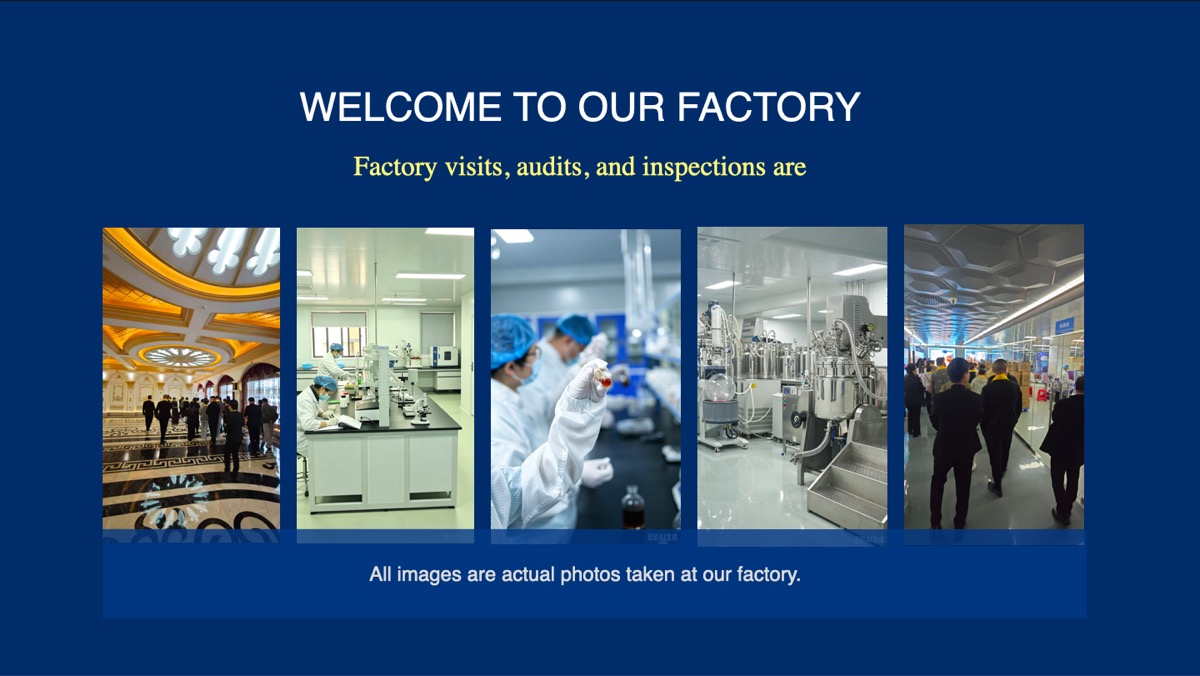
| Clean workshop | 20,000 m² self-owned GMP facility with 100K-class (ISO 8) clean workshop |
| Safety testing | CMA-accredited: mucosal + skin irritation, zero irritation score |
| pH formulation | 3.8-4.5 pH range — aligns with physiological pH for intimate care |
| Compliance | Disinfectant product license (Xiaozihao), cosmetic filing (Zhuangzihao), full COA/MSDS/stability package |
| Regulatory support | Documentation for FDA, BPOM, TFDA, EU CPNP, Halal-related procedures |
| MOQ | Flexible — 500kg per batch, sample evaluation available |
| Track record | 37+ years manufacturing heritage, 27+ years OEM/ODM expertise, trusted by 1000+ brands |
Ready to launch your private label intimate care line? Contact our OEM team for free sample evaluation, compliance documentation review, and a tailored proposal for your brand.
*This guide is for informational purposes only. Regulatory requirements vary by market. Always consult with local regulatory experts before finalizing product specifications for your target markets.*