Feminine Intimate Care OEM Registration in Singapore: HSA Cosmetic Notification Guide
Singapore runs one of the lightest cosmetic notification systems in Southeast Asia — submission through HSA PRISM is effective immediately — but the annual re-notification and the evidence-backed claims rule catch many importers off guard. This guide walks private-label importers through the HSA cosmetic notification for feminine intimate care, the Product Information File, and the claims red lines that force products into a different regulatory pathway.
For B2B buyers sourcing feminine intimate care private label for the Singapore market: cosmetics are regulated by the Health Sciences Authority (HSA) under the Health Products Act and the Health Products (Cosmetic Products – ASEAN Cosmetic Directive) Regulations 2007. Singapore operates a notification plus post-market surveillance model, not pre-market approval — a notification goes live immediately, but compliance is enforced after the fact.
The two rules that change your operating plan are the annual re-notification (the shortest validity cycle in ASEAN) and the evidence-backed claims rule, where every claim you print must be substantiated inside the Product Information File.
Who this guide is for: Brand owners, importers, procurement managers and product developers planning Singapore launches of feminine intimate-care washes, foams, serums, sprays and wellness products — including brands using Singapore as a regional headquarters and compliance base.
1. Why Singapore Is Different: Post-Market Surveillance, Not Pre-Approval
Singapore fully adopts the ASEAN Cosmetic Directive through the Health Products Act. Feminine intimate-care products are classified as cosmetics, and the route to market is a notification — not approval. That distinction is the heart of Singapore's model:
- Submission is effective immediately. For general cosmetics, filing the notification in HSA's PRISM system generates an acknowledgement on the spot, and the product can go on sale. No waiting weeks for a certificate.
- Enforcement happens after the fact. HSA runs post-market surveillance: sampling, laboratory testing for heavy metals and prohibited ingredients, and PIF audits. Your compliance is proven later, not approved in advance.
- The shortest validity cycle in ASEAN. Every notification is valid for one year, and continuing to supply requires an annual re-notification. This is the operational rhythm most brands miss.
2. How Singapore HSA Cosmetic Notification Works
The process runs through the HSA PRISM online system, accessed with a CRIS company account (CorpPass). The applicant is the Singapore-registered Responsible Person, not the foreign factory.
| Element | Singapore Requirement |
|---|---|
| Governing law | Health Products Act + Health Products (Cosmetic Products – ACD) Regulations 2007 |
| System type | Notification + post-market surveillance (no pre-market approval) |
| Deliverable | Cosmetic Product Notification with acknowledgement via PRISM |
| Filing channel | HSA PRISM online (CRIS company account / CorpPass) |
| Local party | Singapore-registered company as Responsible Person (RP) |
| Effective timing | Immediately for general cosmetics; 1-4 weeks review for high-risk types (UV filters, skin-whitening agents, hair dyes, preservatives, nanomaterials) |
| Validity | 1 year; annual re-notification required |
| Fee level | Nominal — reported as free or a small per-product fee depending on risk category |
3. The Annual Re-Notification Rhythm
Singapore's one-year notification validity is the shortest in ASEAN — Malaysia runs 2 years, Thailand 3 years, Vietnam 5 years, and the Philippines offers selectable 1-3 year terms. Plan around this rhythm:
- Re-notify every year before the one-year mark. Re-notification is required if you intend to continue supplying the product.
- Type 2 changes are new events. A change in brand name, product name, product type or distribution rights requires a re-notification. Type 1 changes (company address, contact details, manufacturer details without a UEN change) are simple updates in PRISM.
- Non-compliance is a criminal matter. Failing to notify is punishable by a fine of up to SGD 20,000 and/or up to 12 months' imprisonment.
- Three exemptions exist — advertising/promotional samples, R&D test batches and doctor-prescribed custom products — but even exempt products must still comply with labeling, ingredient and adverse-event-reporting rules.
For brands running multiple SKUs, treat re-notification as a rolling calendar event attached to each product, not an annual company task.
4. The Document Package & the PIF
Singapore is different on documents: no supporting files are uploaded with the notification itself. Instead, the RP keeps a complete Product Information File (PIF) on hand, ready for HSA inspection at any time, and retains it at least 3 years after the last batch is placed on the market.
| PIF Component | What It Must Contain |
|---|---|
| Product description & formula | Specifications plus qualitative and quantitative formula in INCI names |
| Ingredient safety | Safety data and compliance with ACD Annexes (prohibited/restricted, colorants, UV filters, preservatives) |
| Manufacturing details | Manufacturer particulars and manufacturing methods confirming GMP conformity |
| Safety assessment | Safety assessment report signed by a qualified toxicologist |
| Stability & microbiology | Stability and microbiological data |
| Claims substantiation | Scientific evidence backing every claim on the label and in marketing |
| Label artwork & adverse events | Final label specimen and any adverse-event data |
Because the PIF is audited after the fact, the factory's file quality becomes the brand's audit defense. An OEM that keeps this PIF pack current — INCI reconciliation, batch COA, stability data, safety assessment and claim-supporting test reports — turns a HSA audit from a risk into a formality.
5. Labeling & Claims Red Lines in Singapore
Labels must be in English (other languages allowed in addition) and include the product name and function, the full INCI list in descending order of weight, the country of manufacture, the name and address of the Singapore Responsible Person, net content, batch/lot number, manufacturing or expiry date, directions for use, and any ACD-required warnings. Imported products may use sticker labeling.
Claims rules are where Singapore is stricter than it looks:
- Claims must be substantiated in the PIF. Singapore explicitly requires scientific evidence for every claim, documented in the file — not just plausible wording.
- No therapeutic or medicinal positioning. Treatment, anti-inflammatory, hair-loss or melasma-treatment language reclassifies the product as a therapeutic product or medical device on a different pathway.
- ASEAN Claims Guidelines + SCAP. Claims must follow the ASEAN Cosmetic Claims Guidelines and the Singapore Code of Advertising Practice. The classic example: claim "reduces the appearance of wrinkles," not "anti-aging/regenerates skin."
- Watch the feminine-care wording. For intimate-care products, gentle pH-balance, cleansing and moisturizing claims are safe; disease-treatment or strong antimicrobial-therapy language is not.
6. Step-by-Step Filing Workflow
| Step | Action | Owner |
|---|---|---|
| 1 | Appoint a Singapore-registered company as the Responsible Person with CorpPass access | Brand + RP |
| 2 | Lock the OEM file: INCI quantitative formula, specs, batch COA, stability, safety assessment, claims evidence | OEM |
| 3 | Prepare English label artwork with the RP's name and Singapore address | Brand + RP |
| 4 | Compile the PIF under the RP (kept on file, not uploaded) | RP |
| 5 | File the notification in HSA PRISM with CRIS/CorpPass | RP |
| 6 | Confirm the acknowledgement; product may be placed on the market (high-risk types allow 1-4 weeks for review) | RP |
| 7 | Calendar the annual re-notification before the one-year mark | RP |
| 8 | Maintain the PIF, sales records (2 years) and adverse-event reporting | RP |
7. Common Pitfalls & Rejection Reasons
| Pitfall | How to Avoid It |
|---|---|
| Missing the annual re-notification | Treat validity as one year per product; build a rolling re-notification calendar |
| Type 2 change filed as a simple update | Brand/product name, product type and distribution-rights changes require re-notification |
| Claims without PIF evidence | Document scientific support for every claim before labeling or advertising |
| Treatment wording on an intimate-care label | Keep claims cosmetic, gentle and ASEAN-claims compliant |
| No Singapore RP on the label | The RP's name and Singapore address are mandatory label elements |
| Incomplete INCI or missing Annex compliance | Use a reconciled INCI list and check ACD Annexes before filing |
| PIF not audit-ready | Keep the full PIF pack current, with batch COA and safety assessment on file |
8. How to Evaluate an OEM Partner for Singapore
When shortlisting OEM factories for a Singapore launch, the decisive questions are about PIF completeness and claims support:
| Evaluation Area | What to Ask | Why It Matters |
|---|---|---|
| GMP conformity | Do you hold ISO 22716-aligned / GMP evidence? | Not mandatory, but required inside the PIF and at audits |
| PIF readiness | Is a full PIF pack kept on file, not assembled per request? | Singapore audits after the fact; the file is your defense |
| Claims evidence | Can you supply test reports backing gentle, cosmetic claims? | Claims must be substantiated in the PIF |
| Test completeness | Do you provide batch COA, stability and microbiological data? | Standard PIF components; gaps surface at audit |
| Formula stability | Is your tropical-stability data current for ASEAN climate? | Supports the stability section of the PIF |
| MOQ & lead time | Can you start with a flexible batch and hit a 30-60 working-day lead time? | Protects your first-market validation |
How Zhongkang Bainian lines up
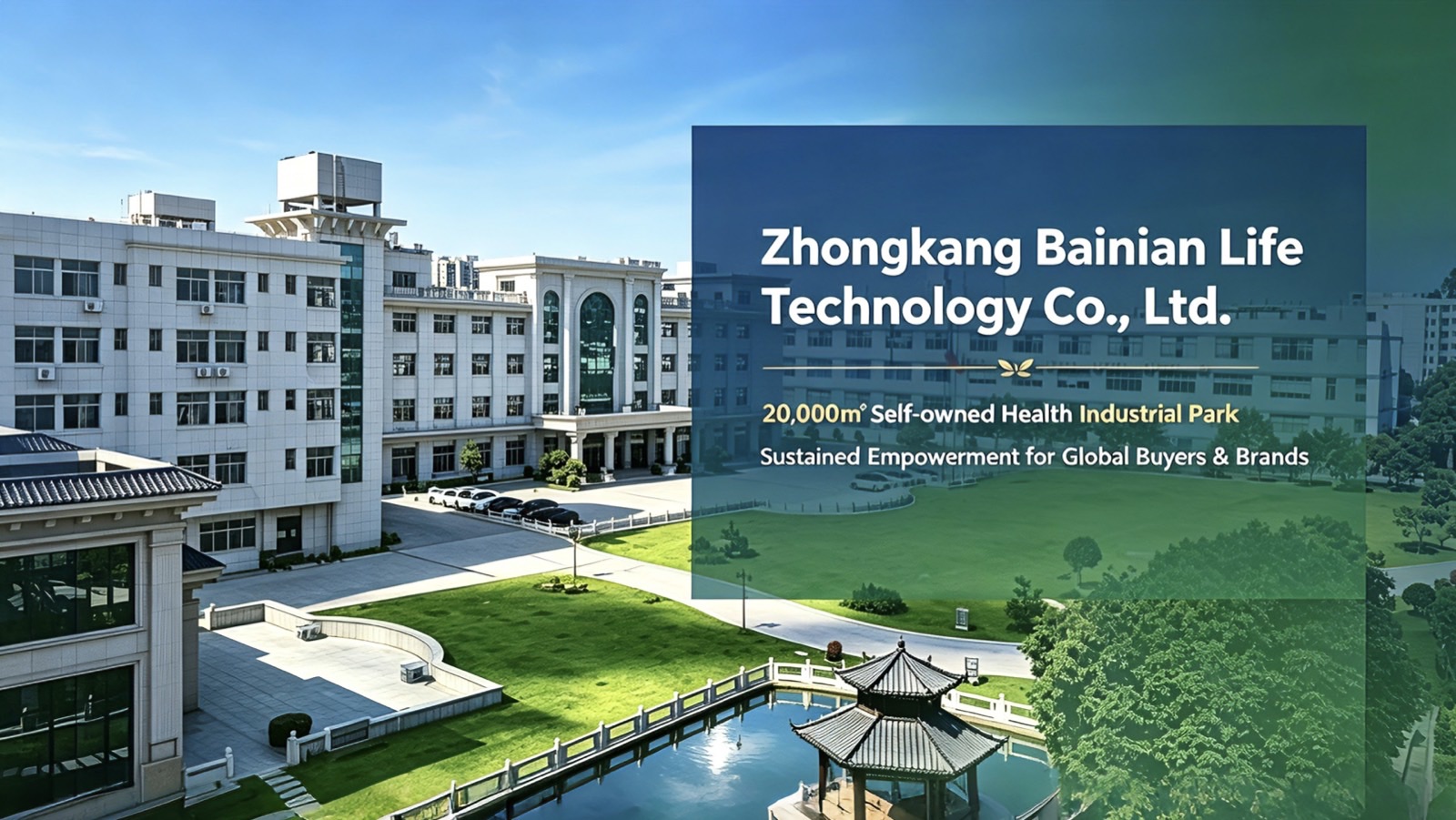
Zhongkang Bainian Life Science Technology Co., Ltd. is a dual-track OEM/ODM manufacturer serving intimate care and personal wellness private label. For Singapore-market projects:
| Requirement | Our Capability |
|---|---|
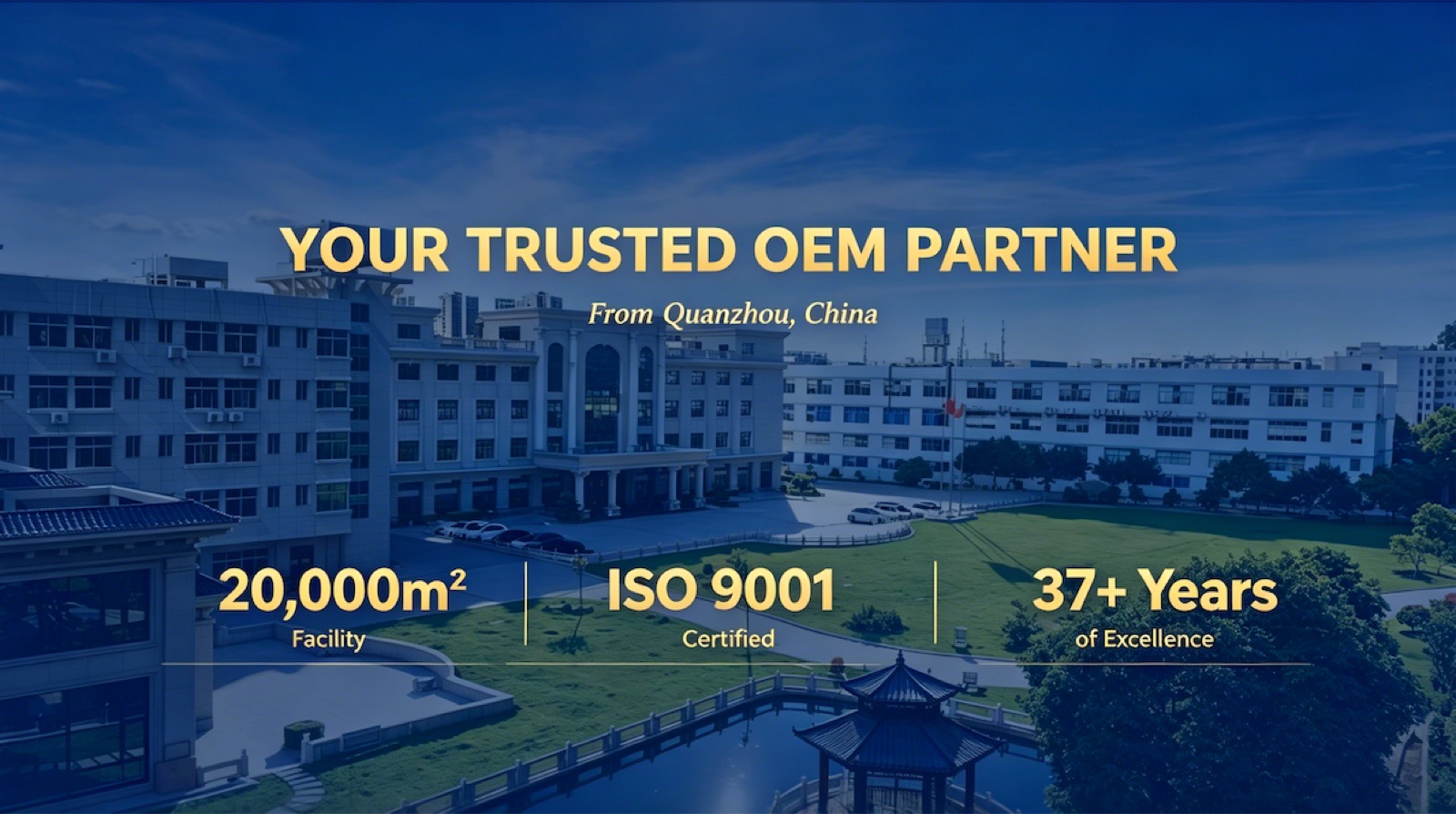
| Production compliance | ISO 22716-aligned & GMP-aligned factory, 20,000 m² facility with 100K-class (ISO 8) clean workshop |
| Dual-track registration | Cosmetic filing (Min-Zhuang 20220008) + disinfectant product license ((Min) Wei-Xiao-Zheng-Zi (2021) No. 040036) |
| Test evidence | CMA-accredited reports (report No. wx24030093): batch COA, microbial, heavy metal, mucosal irritation — usable as PIF claims evidence |
| PIF support | INCI reconciliation, specs, stability data, safety-assessment support and label artwork assembled on project confirmation |
| MOQ & lead time | Flexible MOQ from 500 kg liquid per batch; samples in 7 working days; production 30-60 working days |
| Track record | 37+ years manufacturing heritage, 27+ years OEM/ODM expertise, trusted by 1,000+ brands across 12+ countries |
FAQ: Singapore HSA Cosmetic Notification for Feminine Intimate Care
Is the Singapore HSA cosmetic notification valid indefinitely?
No. A Singapore cosmetic product notification is valid for one year. Companies must submit an annual re-notification before the one-year mark to keep supplying the product. Brand or product name changes, product type changes and changes in distribution rights also require a fresh re-notification.
Can a foreign manufacturer file the Singapore notification directly?
No. Foreign manufacturers cannot submit directly. A Singapore-registered company must be appointed as the Responsible Person (RP) to file the Cosmetic Product Notification through HSA's PRISM system, and the RP's name and Singapore address must appear on the product label.
Do I need GMP certification for the Singapore market?
GMP certification is not mandatory for cosmetic notification in Singapore, but GMP conformity (ISO 22716 or ASEAN Cosmetic GMP) is strongly recommended and forms part of the Product Information File. A well-documented GMP-aligned factory significantly de-risks HSA post-market audits.
Can I make antibacterial or treatment claims on my feminine intimate care label?
No. Singapore follows the ASEAN cosmetic definition: therapeutic, medicinal or disease-related claims reclassify the product as a therapeutic product or medical device with a different pathway. Claims must be truthful, accurate, cosmetic in nature and substantiated by scientific evidence documented in the PIF.
Planning a Singapore launch? Ask our OEM team for the HSA PIF document package and a market-entry review for your feminine intimate-care line.
*This guide is for informational purposes only. Regulatory requirements vary by market and over time. Always consult the Health Sciences Authority of Singapore and your appointed local Responsible Person before finalizing product specifications, documentation and launch timelines.*