Feminine Intimate Care OEM for Vietnam: Cosmetic Product Notification Guide
Vietnam regulates feminine intimate care through a Drug Administration of Vietnam (DAV) cosmetic product notification (Phiếu công bố mỹ phẩm) under the ASEAN Cosmetic Directive. This guide walks private-label importers through the filing, the enhanced-management batch-testing rule, the CFS document package, and the label-claim pitfalls that stall launches.
For B2B buyers sourcing feminine intimate care private label for Vietnam: Vietnam is one of Southeast Asia's largest and fastest-growing single markets for feminine hygiene and intimate wellness brands, and its cosmetics route runs on the ASEAN Cosmetic Directive. Every feminine intimate-care product sold legally in Vietnam needs a Drug Administration of Vietnam (DAV) cosmetic product notification — a declaration-based filing that yields a notification number valid for five years and required for customs clearance.
The notification is submitted by a Vietnamese responsible entity. Your Chinese OEM factory's job is to supply the Certificate of Free Sale, Product Information File evidence and technical documents behind it. Getting that package right at the sourcing stage is what separates a 3-month market entry from a 12-month one.
Who this guide is for: Brand owners, importers, procurement managers and product developers planning Vietnam private-label launches of feminine intimate-care washes, foams, serums, sprays and wellness products.
1. Why Vietnam Is the Next Gate for Feminine Intimate Care
The Drug Administration of Vietnam (DAV), under the Ministry of Health, regulates all cosmetics entering the Vietnamese market. Feminine intimate-care products such as intimate washes, foams, sprays and serum-style care items are regulated as cosmetics under the ASEAN Cosmetic Directive (ACD) framework — the same legal architecture used by Indonesia, Malaysia, Thailand and the Philippines.
Three structural facts matter to B2B buyers:
- Notification, not approval. Vietnamese cosmetics use a declaration-based product notification system, not a pre-market approval scheme. The route is shorter than drug registration, but the information burden is high and rejections are common when documentation is incomplete.
- Five-year validity. The DAV issues a cosmetic product notification number (Phiếu công bố sản phẩm mỹ phẩm) valid for five years. The notification number must be presented to customs for imports and to distribution partners at launch.
- No cross-country recognition. Even though Vietnam, Indonesia, Malaysia, Thailand and the Philippines all follow the ACD, each country runs its own separate filing. A product already notified with BPOM in Indonesia still needs its own Vietnamese notification.
Without a valid DAV notification, a feminine intimate-care product cannot be cleared through Vietnamese customs, listed by distributors, or sold in pharmacies, maternity channels or e-commerce platforms. For private-label brands, Vietnam readiness is not a back-office task — it is the market-entry decision that determines launch timing.
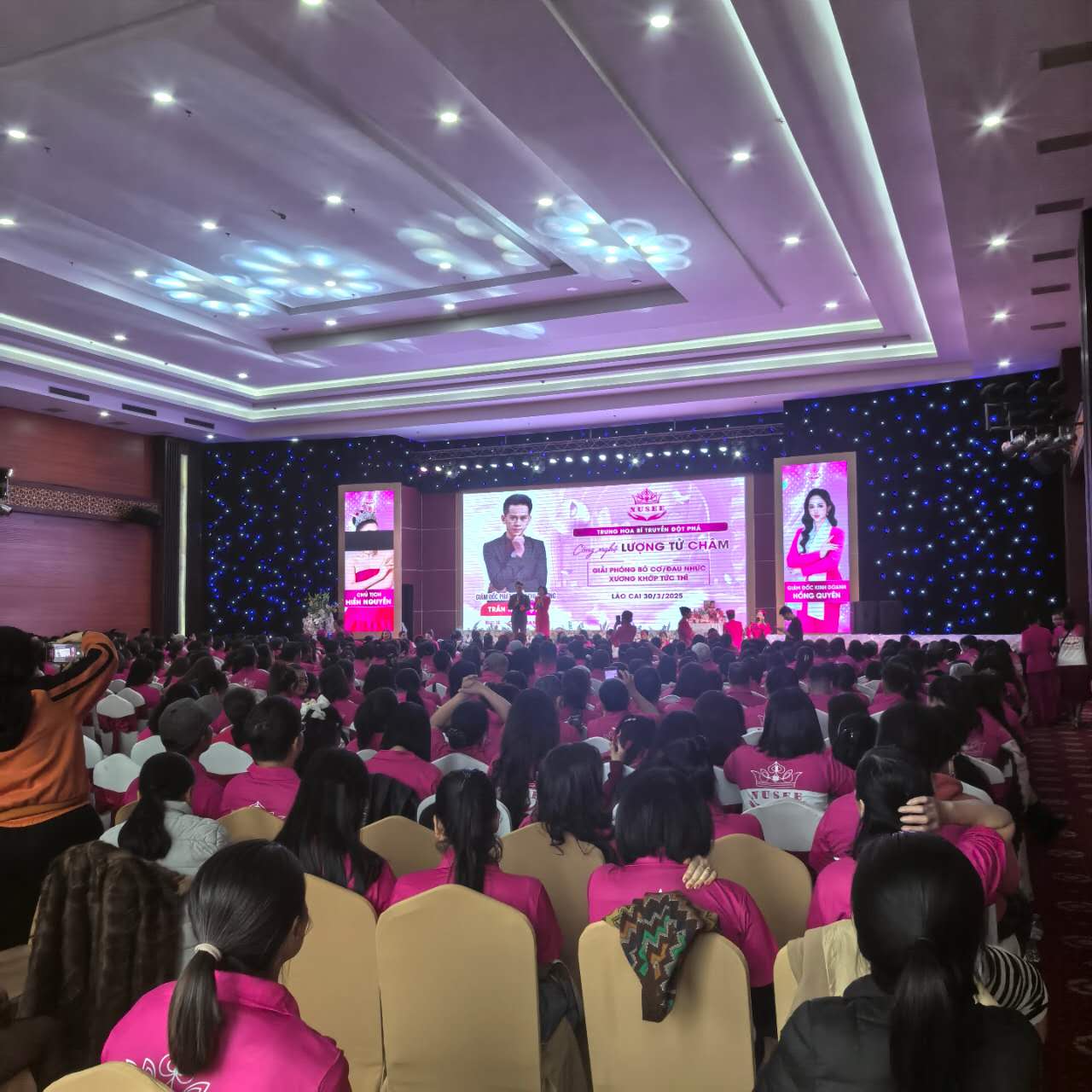
2. How Vietnam Cosmetic Product Notification Works: The Framework
Vietnam's cosmetic management rules rest on Circular 06/2011/TT-BYT, issued on January 25, 2011, to implement the ASEAN Cosmetic Directive. The Circular has been amended several times — most notably by Circular 09/2015/TT-BYT, Circular 29/2020/TT-BYT and the latest Circular 34/2025/TT-BYT (July 3, 2025) — so always confirm the current version with a Vietnamese regulatory professional before filing.
Notifications are submitted to the DAV online, in person or via public postal service. The practical division of labor is fixed: a Vietnamese responsible entity holds the filing and the Product Information File; the overseas OEM factory supplies all technical evidence behind it.
Key components of a Vietnamese cosmetic notification
- Cosmetic Product Notification Form (Appendix 01-MP): signed and sealed by the legal representative of the responsible entity; digitally signed for online submission.
- Product quality standards: specifications the finished product must meet, maintained with the notification.
- Certificate of Free Sale (CFS): required for imported cosmetics — China is not a CPTPP member, so the CFS has no exemption and is a hard import requirement.
- Full INCI ingredient list: every ingredient declared using INCI nomenclature, with product type, intended use, manufacturer and applicant details.
- Product Information File (PIF): assembled per the ASEAN Cosmetic Directive and kept at the address of the responsible party for post-market inspection.
| Notification Element | Who Prepares It | Why It Fails Without It |
|---|---|---|
| Notification form (Appendix 01-MP) | Local responsible entity | No filing can be submitted |
| Product quality standards | Brand / OEM | Rejected as incomplete dossier |
| Letter of Authorization | Brand + OEM | Ownership of the product file is unproven |
| Certificate of Free Sale (CFS) | OEM factory (export market) | Customs cannot clear imports without it |
| Full INCI ingredient list | OEM factory | Ingredient screening cannot proceed |
| PIF (per ASEAN Cosmetic Directive) | Brand / local responsible entity | Mandatory for post-market inspection |
| Batch test certificate (Group 2 products) | OEM factory (CMA-accredited lab) | Mandatory for enhanced-management products |
The notification fee is approximately 500,000 VND per product, and the overall cycle — including document preparation — is typically 1 to 6 months, with the notification itself taking roughly 2 to 3 months.
3. The Enhanced-Management Group & Batch Testing Rule
Within the Vietnamese notification system, cosmetics are split into two handling groups:
- Group 1 (Nhóm 1) — standard products: routine dossier review with a 5-working-day request window when clarification is needed.
- Group 2 (Nhóm 2) — enhanced management (tăng cường quản lý): products under heightened regulatory scrutiny. The notification dossier for Group 2 products must include a batch test result certificate (Phiếu kết quả kiểm nghiệm của một lô sản phẩm mỹ phẩm) for one production batch.
Feminine intimate-care formulations frequently fall into the enhanced-management group because of their sensitive intended use and the scrutiny on their finished-product safety data. That makes the batch test certificate a practical requirement for most private-label launches in this category.
A 2026 draft amendment also signals that CGMP certification or ISO 22716 evidence will be added to the dossier to support post-notification inspection. Factories that already operate ISO 22716-aligned production — and can document it — are better positioned for Vietnam than those that cannot.
Practical note: For Vietnam-destined projects, Zhongkang Bainian supplies CMA-accredited batch test certificates, ISO 22716-aligned production evidence and the full technical dossier that the Vietnamese responsible entity needs to complete the notification. The Chinese factory controls the upstream evidence; the local representative controls the filing.

4. The Document Package Your OEM Factory Must Deliver
Most Vietnam notification delays do not come from formula safety. They come from incomplete or improperly formatted documents supplied by the Chinese factory. The following package is the baseline to demand during OEM negotiation — before you pay for samples, not after.
| Document | Vietnam Requirement | Verification Point |
|---|---|---|
| Certificate of Free Sale (CFS) | Required for imported cosmetics | No CPTPP exemption for China-made goods |
| Letter of Authorization (LOA) | Notarized and consular-legalized | Product name, formula reference, validity, official seal |
| Full INCI ingredient list | Complete, including minors | Every formula ingredient declared |
| Product quality standards | Per finished product | Specifications match the submitted batch |
| Batch test certificate | Mandatory for Group 2 (enhanced management) | CMA-accredited or equivalent lab |
| PIF (Product Information File) | Per ASEAN Cosmetic Directive | Held by the Vietnamese responsible entity |
| ISO 22716 / GMP evidence | Emerging dossier component (2026 draft) | Valid and current, not expired |
Demand these deliverables in writing at the RFQ stage. An OEM that keeps the full package on file shortens your Vietnam launch by months; one that assembles it only after sample confirmation adds risk to your timeline.
5. Labeling & Claims Red Lines in Vietnam
Vietnamese labeling and advertising rules sit on top of the notification. Two red lines matter most to feminine intimate-care brands:
- Vietnamese-language labeling. Required labeling fields must be presented in Vietnamese, following DAV labelling rules for cosmetics.
- Pharmacological-claim exclusion. Products whose claims imply permanent effects or pharmacological action are not classified as cosmetics at all. Prohibited examples include "stimulates hair growth" and "permanently eliminates dandruff" — and by the same logic, strong antibacterial and sterilizing claims push a feminine intimate-care wash out of the cosmetics category and toward drug classification.
This is the trap for intimate-care imports from China, where a disinfectant-registered (Xiaozihao) product can carry bacteriostatic language. In Vietnam, the safe path is a gentle claim set: pH-balanced, mild, botanically formulated, mucosa-friendly — with any bacteriostatic or anti-odor wording kept soft, evidence-backed and consistent with ASEAN claim rules. A Vietnamese regulatory professional should sign off on the final claim set before the label is printed.
| Claim Direction | Safe in Vietnam | Risky / Off-limits |
|---|---|---|
| Formula character | pH-balanced, botanically formulated, mild | "Cures", "treats" vaginal conditions |
| Microbial wording | Gentle, evidence-backed bacteriostatic language | "Sterilizes", "eliminates bacteria" |
| Duration | Daily-use maintenance language | "Permanently", "completely" fixes |
| Body function | Comfort, freshness, mucosa-friendly | Pharmacological effect claims |
6. Step-by-Step Filing Workflow for Private-Label Brands
| Step | Who Owns It | Key Point |
|---|---|---|
| 1. Select OEM & confirm formula | Brand + OEM | Confirm Vietnam-targeted formula and INCI |
| 2. Complete testing | OEM | Batch test certificate, microbial, quality standards |
| 3. Obtain CFS & LOA | OEM | Certificate of Free Sale + notarized authorization |
| 4. Assemble PIF | Brand / local entity | Per ASEAN Cosmetic Directive, kept on file |
| 5. Appoint Vietnamese responsible entity | Brand | Local entity with the right to file |
| 6. Submit notification to DAV | Local entity | Online / in person / postal |
| 7. Receive notification number | DAV | Valid 5 years; number used at customs |
| 8. Import & launch | Brand + distributor | Vietnamese label final before distribution |
7. Common Rejection Reasons & How to Avoid Them
| Rejection Cause | How to Avoid It |
|---|---|
| Missing or expired CFS | Obtain a current Certificate of Free Sale from the factory before filing |
| LOA not notarized / consular-legalized | Complete legalization before submission; leave time for the process |
| Incomplete INCI list | Require a full INCI declaration including auxiliary ingredients |
| No batch test certificate (Group 2) | Confirm your product's group; supply the batch test report for enhanced-management items |
| Label claims outside cosmetics scope | Keep claims gentle and ASEAN-rule compliant; avoid pharmacological language |
| Quality standards mismatch | Specifications must match the notified batch exactly |
8. How to Evaluate an OEM Partner for Vietnam Entry
When shortlisting Chinese OEM factories for a Vietnam private-label project, ask questions that map directly to DAV notification readiness:
| Evaluation Area | What to Ask | Why It Matters |
|---|---|---|
| CFS capability | Can you issue a current Certificate of Free Sale for exports? | Hard import requirement for China-made cosmetics |
| GMP / ISO standing | Do you operate ISO 22716-aligned production with evidence on file? | Emerging dossier component (2026 draft) |
| Batch test completeness | Can you supply a CMA-accredited batch test certificate? | Mandatory for Group 2 (enhanced management) |
| Document packaging | Is the Vietnam document set kept on file, not assembled on request? | Determines launch speed |
| Claim support | Can you validate gentle, evidence-backed claims for the Vietnamese market? | Keeps the product inside the cosmetics category |
| MOQ & lead time | Can you start with a flexible batch and hit a 30-60 working-day lead time? | Protects your first-market validation |
How Zhongkang Bainian lines up
Zhongkang Bainian Life Science Technology Co., Ltd. is a dual-track OEM/ODM manufacturer serving intimate care and personal wellness private label. For Vietnam-bound projects:
| Requirement | Our Capability |
|---|---|
| Production compliance | ISO 22716-aligned & GMP-aligned factory, 20,000 m² facility with 100K-class (ISO 8) clean workshop |
| Dual-track registration | Cosmetic filing (Min-Zhuang 20220008) + disinfectant product license ((Min) Wei-Xiao-Zheng-Zi (2021) No. 040036) |
| Test evidence | CMA-accredited reports (report No. wx24030093): batch testing, microbial, heavy metal |
| CFS support | Export documentation prepared for Certificate of Free Sale issuance |
| Document package | Standardized Vietnam/Southeast-Asia document templates assembled on project confirmation |
| MOQ & lead time | Flexible MOQ from 500 kg liquid per batch; samples in 7 working days; production 30-60 working days |
| Track record | 37+ years manufacturing heritage, 27+ years OEM/ODM expertise, trusted by 1,000+ brands across 12+ countries |
FAQ: Vietnam Cosmetic Notification for Feminine Intimate Care
Is Vietnam cosmetics registration a notification or an approval?
Vietnam runs a declaration-based cosmetic product notification system, not a pre-market approval scheme. The Drug Administration of Vietnam (DAV) receives the filing and issues a cosmetic product notification number (Phiếu công bố sản phẩm mỹ phẩm) valid for five years, which must be presented for customs clearance and distribution.
Can my Chinese OEM factory file the Vietnam cosmetic notification directly?
No. The Vietnam cosmetic product notification must be filed by a Vietnamese responsible entity or authorized local representative holding the Product Information File (PIF). The overseas OEM factory supplies the technical document package, including the Certificate of Free Sale, INCI list, quality standards and batch test certificates.
Can feminine intimate care products claim antibacterial on the Vietnamese market?
Not freely. Vietnam treats feminine intimate care as cosmetics under the ASEAN Cosmetic Directive, and claims implying permanent or pharmacological effects — including strong antibacterial and sterilizing language — push a product out of the cosmetics category and toward drug classification. Keep claims gentle, evidence-backed and consistent with ASEAN claim rules.
What documents must my OEM factory provide for Vietnam cosmetic notification?
The core package includes a Certificate of Free Sale (CFS) for imports, a Letter of Authorization (notarized and consular-legalized), the full INCI ingredient list, product quality standards, and batch test certificates — mandatory for enhanced-management (Group 2) products. A Product Information File (PIF) per the ASEAN Cosmetic Directive is also required for every notified product.
Ready to plan a Vietnam private-label launch? Ask our OEM team for the Vietnam document package, CFS and batch-test evidence, and a claim-set review for your feminine intimate-care line.
*This guide is for informational purposes only. Regulatory requirements vary by market and over time. Always consult with Vietnamese regulatory professionals and your appointed local representative before finalizing product specifications, documentation and launch timelines.*