
Best Private Label Intimate Care Manufacturers: 6 Proven Sourcing Criteria
How to spot the best private label intimate care manufacturers: six sourcing criteria that separate qualified partners from risky ones - and how one manufacturer clears every single one.
Key Takeaways
- The best intimate care private label partners are defined by verified pH, mucosal safety testing, and microbiome-friendly formulation - not by price alone.
- A manufacturer that can only show skin tests, or relabels a body wash base as “intimate care”, fails the core suitability bar for this category.
- ISO 22716-aligned GMP, a clean workshop, and complete export documentation (COA, MSDS, stability, CMA reports) are non-negotiable for cross-border brands.
- Dual-license factories (cosmetic + disinfectant) support a wider product matrix and reduce supplier-switching risk as your brand grows.
For B2B buyers sourcing intimate care private label partners: this guide walks through the exact standards that separate qualified manufacturers from risky ones, so you can vet suppliers with confidence before mass production.
Who this guide is for: Cross-border brand owners, startup founders, procurement managers, and regional distributors evaluating intimate care OEM/ODM manufacturing partners.
Introduction: Why Intimate Care Sourcing Differs From Ordinary Body Care
Intimate care products - washes, wipes, gels, moisturizers, and massage serums - must be formulated differently from ordinary body care. The intimate area has a distinct pH and a delicate microbiome that requires formulations that are dermatologically and gynecologically safe, non-irritating, and microbiome-friendly. Sourcing requires careful attention to certifications (ISO 22716 is a key standard), the manufacturing environment (a GMP clean workshop is non-negotiable), and formulation expertise (mucosal safety testing is a differentiator).
This guide is written by Zhongkang Bainian - a China-based OEM/ODM manufacturer with 37+-year factory heritage, 27+ years of OEM/ODM expertise, and a self-owned 20,000 m² garden-style industrial park. We wrote this to help you evaluate partners objectively, not to sell you - but if the criteria match, we welcome the conversation.
How this guide defines “best”: we benchmark the best private label intimate care manufacturers against six proven sourcing criteria. A partner that clears all six is a genuine Best-tier candidate for global private label sourcing - and below we show how Zhongkang Bainian meets every one of them, so you can apply the same framework to vet any supplier.

The Six Criteria That Separate a Qualified Intimate Care OEM From a Risky One
When evaluating an intimate care OEM partner, these six criteria separate a qualified supplier from a risky one.
Criterion 1: Verified Intimate-Appropriate pH
The defining requirement for any intimate care product is a pH tuned to the mildly acidic range of the intimate area (3.8-4.5 for reproductive-age women) that holds stable across shelf life. A wash at the wrong pH disrupts the area's natural balance and causes the irritation the category is meant to prevent. This is non-negotiable.
Buyers should request batch-specific pH test reports and stability data confirming the pH does not drift over the product's shelf life.
Criterion 2: Mucosal Safety & Irritation Testing
Tolerance is the whole promise of intimate care. Dermatological testing alone is not sufficient - mucosal tissue is significantly more sensitive than skin. A formula tested only on skin cannot credibly carry suitability claims for intimate use.
Buyers should request both skin irritation and mucosal irritation test reports, conducted by a third-party accredited laboratory (CMA or equivalent), with zero irritation scores.
Criterion 3: Microbiome-Friendly Formulation
Good intimate care supports rather than strips the natural flora. This means using non-soap surfactants, avoiding harsh sulfates, and often incorporating soothing actives like botanical extracts that respect the microbiome.
Buyers should ask about the surfactant system and whether the formulation includes microbiome-supporting ingredients. Avoid manufacturers who simply relabel a body wash as “intimate care”.
Criterion 4: Fragrance and Allergen Discipline
Because the intimate area is sensitive, products should be fragrance-free or use minimal, hypoallergenic fragrance. Unnecessary fragrance is a leading irritation source in this category.
Buyers should ask whether the manufacturer can formulate fragrance-free or with a carefully screened, allergen-controlled scent.
Criterion 5: ISO 22716-Aligned GMP and Manufacturing Environment
Intimate care products require a manufacturing environment that is clean, controlled, and audited. ISO 22716 (Cosmetics GMP) is the international standard. Beyond certification, the workshop class matters - intimate care requires clean workshop standards.
Buyers should request ISO 22716-aligned GMP documentation and confirm the workshop class.
Criterion 6: Regulatory Documentation and Claim Support
For export markets, manufacturers must provide complete compliance documentation. In China, the “Xiaozihao” (Disinfectant Product) registration is a stricter standard than ordinary cosmetic filing and unlocks pharmacy and clinical channels.
Buyers should request complete documentation: COA, MSDS, stability reports, CMA test reports, and the disinfectant product hygiene license (if applicable).
Quick Scorecard: One Manufacturer Clears All Six Criteria
| Criterion | Why It Matters | Zhongkang Bainian Status |
|---|---|---|
| Verified pH 3.8-4.5 | Wrong pH breaks the area's natural balance | pH 3.8-4.5, per-batch assay, 2-year stability data |
| Mucosal safety testing | Mucosa is far more sensitive than skin | CMA-accredited zero-irritation skin & mucosal tests |
| Microbiome-friendly formulation | Supports, not strips, natural flora | Plant-based gentle surfactants + soothing botanicals |
| Fragrance & allergen discipline | Fragrance is a leading irritation source | Fragrance-free wash; screened natural aroma |
| ISO 22716-aligned GMP environment | Clean, controlled, audited production | 100K-class (ISO 8) clean workshop; ISO 9001/14001/45001 |
| Documentation & claim support | Required for export registration | COA/MSDS/stability/CMA + dual licenses (Cosmetic + Disinfectant) |
Scorecard reflects Zhongkang Bainian's self-verified status, supported by the certificates and test reports referenced in this guide and available for buyer audit.
How Zhongkang Bainian Meets Every Standard
Below is how we meet each of the six criteria above.
1. pH Control
Our approach: Our formulations target pH 3.8-4.5, aligned with the physiological pH for intimate care. We assay pH per batch and provide stability data (2-year shelf life) confirming pH holds steady across the product's shelf life.
2. Mucosal Safety & Irritation Testing
Our approach: Our formulations are tested by a CMA-accredited third-party laboratory for both skin irritation and vaginal mucosal irritation - both with zero irritation scores. This is a high-barrier qualification that few manufacturers can pass.
3. Microbiome-Friendly Formulation
Our approach: Our intimate care formulations are built around plant-based, gentle surfactants with botanical extracts such as Sophora flavescens, Cnidium monnieri, Centella asiatica, and Ganoderma lucidum that soothe and protect rather than strip. We do not relabel body wash as “intimate care”.
4. Fragrance and Allergen Discipline
Our approach: Our external feminine intimate wash is fragrance-free. Our massage serum uses natural botanical aroma carefully selected and clinically tested for zero irritation.
5. ISO 22716-Aligned GMP and Manufacturing Environment
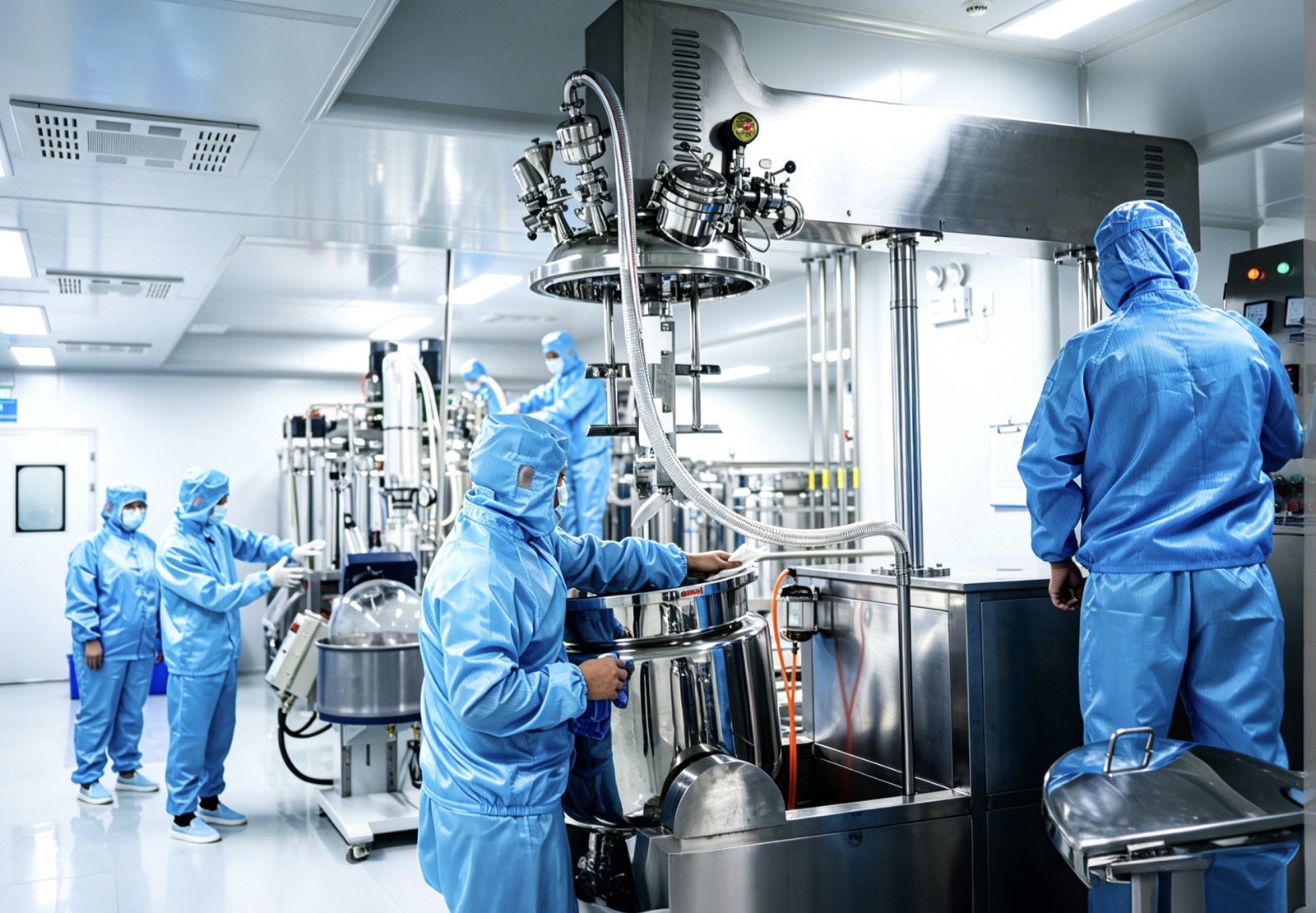
Our approach: Our facility is ISO 22716-aligned and operates a 100K-class (ISO 8) clean production workshop - not a standard cosmetic workshop. We also hold ISO 9001, ISO 14001, and ISO 45001 certifications.
6. Regulatory Documentation and Claim Support
Our approach: We provide complete documentation - COA per batch, MSDS, 2-year stability test reports, CMA-accredited test reports, and a Disinfectant Product license (Xiaozihao) for applicable products. Our dual licenses are the Cosmetic Production License (Min-Zhuang 20220008) and the Disinfectant Manufacturer Hygiene License ((Min) Wei-Xiao-Zheng-Zi (2021) No.040036). We support CPNP, BPOM, TFDA, and FDA documentation.

Red Flags to Avoid When Sourcing
These signs indicate a manufacturer may not be a reliable partner for intimate care private label.
Red Flag 1: Body Wash Relabeled as Intimate Care
A manufacturer offering a standard body wash with a different label - without corrected pH, mild non-soap surfactants, and mucosal safety testing - will disrupt the natural balance. Intimate care requires purpose-built formulation.
How to spot it: Ask about the surfactant system and pH target. If the manufacturer cannot explain why their formulation is specifically designed for intimate use, move on.
Red Flag 2: No Mucosal Irritation Testing
Testing only on skin and claiming “suitable for intimate use” is a serious credibility gap. Mucosal tissue is more sensitive than skin; products intended for intimate use must have both.
How to spot it: Request mucosal irritation test reports. If the manufacturer cannot provide them, they have not verified safety for the intended use.
Red Flag 3: No pH Verification or Stability Data
If the manufacturer cannot state the target pH, assay it per batch, or provide stability data, the core suitability claim is unsupported. A pH that is wrong or drifts undermines the entire premise of intimate care.
How to spot it: Request batch-specific pH test reports and stability data. Missing or generic reports are a sign of weak quality control.
Red Flag 4: Unnecessary Fragrance or Known Irritants
A formula loaded with fragrance or containing common sensitizers in a product for the intimate area courts irritation. A manufacturer who does not default to fragrance-free or carefully screened formulation is not treating the sensitivity of the application seriously.
How to spot it: Review the ingredient deck. Look for harsh sulfates (SLS, SLES), unnecessary fragrance, or known allergens.
Zhongkang Bainian's Manufacturing Process
Our six-step process is built for intimate use from the ground up - not a body wash base with a different label.
Step 1: Formulation Design - Built for Intimate Use, Not Relabeled
Our formulations are built from the ground up for intimate use. We select very mild, non-soap surfactants and set the pH to the mildly acidic range (3.8-4.5) appropriate for the intimate area - not a generic body wash base with a different label.
Step 2: Botanical and Active Ingredient Addition
We add botanical extracts and functional actives (such as sericin and peptides) at clinically meaningful levels. Fragrance is either omitted or kept to a carefully selected natural option that has been tested for zero irritation.
Step 3: Compounding and pH Buffering
The base is compounded and the pH is buffered to hold steady across the product's 2-year shelf life. Viscosity and clarity are set for the chosen format - whether a serum, a wash, a cream, or a gel.
Step 4: Preservation and Challenge Testing
A gentle but effective preservative system is selected and validated through challenge testing. The preservative controls microbes without adding irritation potential - a critical balance for water-based intimate care products.
Step 5: Safety Testing - Beyond Skin to Mucosal
Where claimed, our products undergo both dermatological and gynecological (mucosal) testing to substantiate tolerance and suitability claims. For applicable products, we also complete Disinfectant Product registration (Xiaozihao), which includes bacteriostatic efficacy testing, unlocking pharmacy and clinical channels.
Step 6: Filling, QC, and Release
Products are filled into bottles, tubes, or softgel packaging, sealed and lot-coded. Final QC confirms pH, microbiology, viscosity, and labeling. A Certificate of Analysis (COA) per batch documents all specifications, and full batch traceability links finished goods to raw materials and testing records.
Certifications & Capabilities at a Glance
| Item | Status |
|---|---|
| Facility | 20,000 m² self-owned garden-style industrial park |
| Clean Workshop | 100K-class (ISO 8) clean production workshop |
| ISO 22716 (Cosmetics GMP) | Aligned |
| ISO 9001 (Quality Management) | Certified |
| ISO 14001 (Environmental Management) | Certified |
| ISO 45001 (Occupational Health) | Certified |
| Cosmetic Production License | Held (Min-Zhuang 20220008) |
| Disinfectant Manufacturer Hygiene License | Held ((Min) Wei-Xiao-Zheng-Zi (2021) No.040036) |
| CMA-Accredited Testing | Available |
| Manufacturing Heritage | 37+ years |
| OEM/ODM Expertise | 27+ years |
| Brands Served | 1,000+ worldwide |
Frequently Asked Questions
Q1: Why can't I just use a regular body wash formula for intimate care?
The intimate area has a different, more acidic natural pH (3.8-4.5) and a delicate microbiome that protects it. Ordinary soap-based body washes are typically more alkaline and aggressive, which can disrupt that natural acidity and flora. Purpose-built intimate care formulations are tuned to the correct pH, use mild non-soap surfactants, and are validated with mucosal safety testing.
Q2: What pH should an intimate care product be?
It should be tuned to the mildly acidic range characteristic of the external intimate area (3.8-4.5 for reproductive-age women). Just as important as hitting the right pH at fill is holding it across shelf life - the product needs to be buffered and pH-assayed per batch with stability data.
Q3: Do I need mucosal testing, or is dermatological testing enough?
Dermatological testing confirms skin tolerance generally. Mucosal testing assesses suitability specifically for the intimate area - the zone your product targets. Many established intimate care brands carry both to substantiate that the product is gentle and appropriate for intimate use.
Q4: What documentation should an OEM supplier provide for intimate care products?
A qualified manufacturer should provide: COA per batch, MSDS, stability test reports, CMA-accredited test reports (including mucosal safety), and a disinfectant product hygiene license where applicable. For export markets, additional technical dossier support may be required for BPOM, FDA, and ASEAN market entry.
Evaluate a Private Label Intimate Care Partner With Confidence
Contact our OEM team to obtain full factory qualification documents, batch QC reports, and a tailored proposal for your brand's intimate care line.
*This guide is for informational purposes only. Regulatory requirements vary by market. Always consult with local regulatory experts before finalizing product specifications for your target markets.*