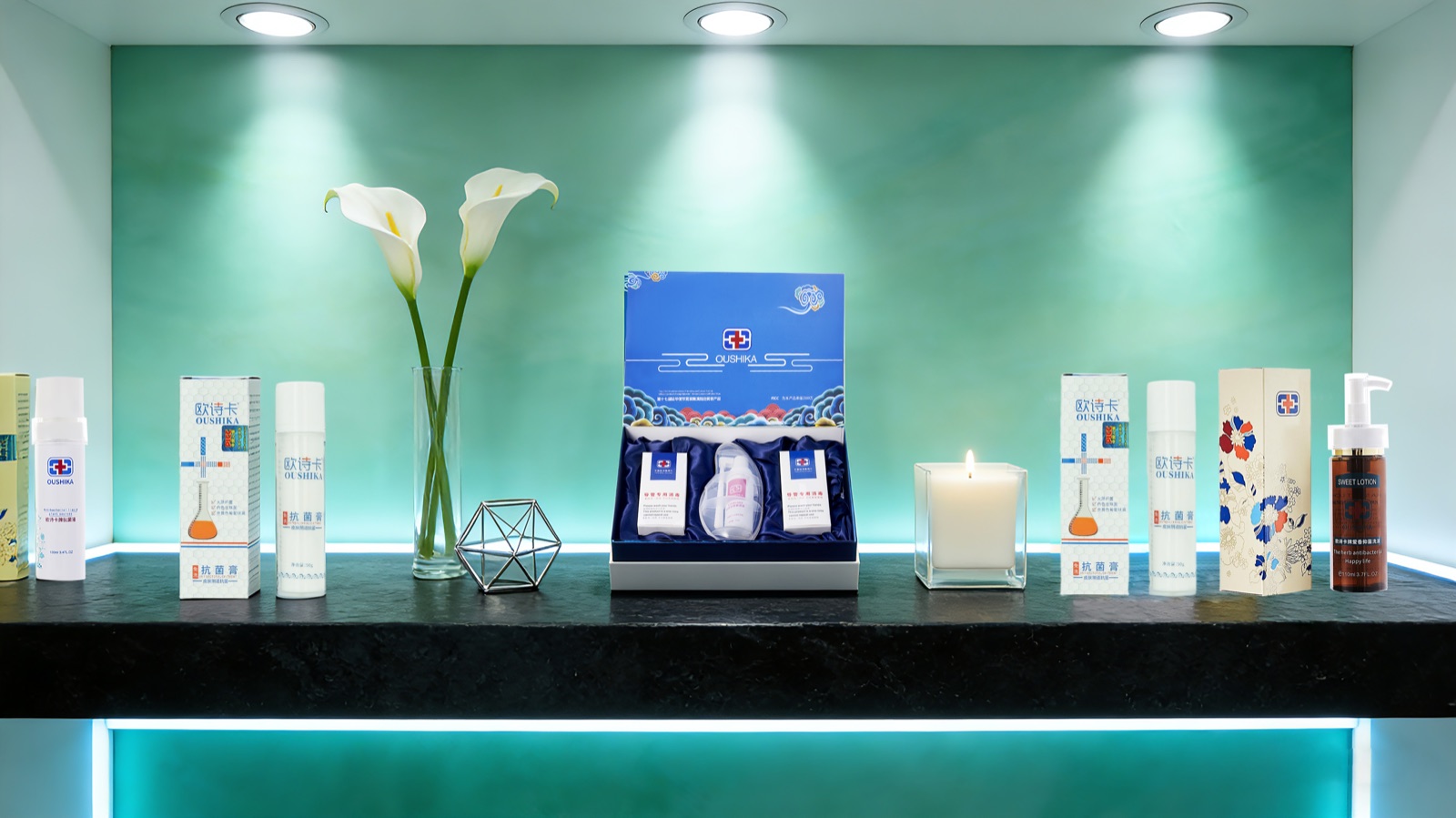
How to Find a Trusted OEM/ODM Manufacturer for Your Premium Feminine Wellness Brand
A trusted feminine wellness OEM/ODM manufacturer is more than a factory that simply mixes and fills cosmetic products. It is a long-established operator built on six core pillars: 1. solid years-of-industry background, 2. capable in-house R&D and custom formulation capacity, 3. robust in-house manufacturing infrastructure with standardized quality control, 4. stable end-to-end delivery performance, 5. proven track-record serving global feminine-wellness brand partners across multiple markets, and 6. in-house brand plus end-market operational experience. Together these six pillars separate genuine manufacturing partners from trading houses or low-grade subcontractors. Manufacturers with direct-to-end-user retail exposure bring real-world sales insights into formulation development, substantially lowering your new-product launch risks.
The global premium feminine-wellness space continues its rapid growth. Many DTC brands, spa operators and postpartum-focused businesses are turning to OEM/ODM partners to launch their product lines. However, feminine-wellness items come into direct contact with sensitive mucosal tissue. Your choice of manufacturer can define brand success or failure. Many new brand owners make decisions based only on sample performance and unit price, overlooking those core pillars. This often leads to costly pitfalls around quality inconsistency, compliance violations and delayed product launches. This article walks you through how to properly vet potential suppliers, so you can bring safe, high-quality feminine-wellness goods to global markets.
Criterion 1: Category Depth, Not Just Company Age
Company age matters, but only when it is age in your category. A factory with decades in general cosmetics has learned different lessons from a manufacturer that has spent those years on intimate-area care. Feminine wellness production carries its own chemistry - mucosa-safe surfactant systems, pH-aligned formulations, strict cleanroom discipline - and those are competencies built over years of dedicated runs, not by rebranding a body-care line.
What to look for: a heritage specifically in feminine intimate-health manufacturing, continuous in-house R&D focused on intimate-care product formats, and a portfolio of completed projects you can reference. The depth signal is usually visible in whether the factory can answer category-specific stability and safety questions on the spot, or whether it defers to generic skincare answers.
How to verify: ask for the factory's founding year and the number of years it has manufactured intimate-care products specifically. Then ask which formats it runs today - liquid, gel, cream, emulsion - and for reference projects shipped to markets similar to yours.
Criterion 2: R&D That Builds Mucosa-Safe Formulas, Not Repurposed Body-Care Bases
Your brand's first product is your brand's first impression, and for a premium feminine wellness line the formulation is the entire product. Many new brands damage that reputation by partnering with a manufacturer that pulls a generic base off the body-care shelf, tweaks fragrance or color, and re-positions it as a professional intimate-health formula. Migrated body-care bases routinely fail the intimate zone: they drift outside its natural 3.5-4.5 pH range, lean on harsh surfactants, or carry preservative profiles not optimized for delicate mucosal tissue — disrupting the microbiome and turning your first customers into negative reviews that can follow your entire wash, gel, cream and serum portfolio.
What to look for: an in-house R&D laboratory focused on intimate-zone mucosal compatibility, building purpose-built bases rather than modifying body-care stock. It should support two development pathways — proven market-validated ODM catalog formulas ready for licensing, and fully custom OEM development for your brand positioning. Accelerated stability testing, preservative-challenge testing, and safety assessment should be executed or supervised in-house, not outsourced as a box-ticking report.

How to verify: request formulation briefs and historical batch pH test reports. Confirm it builds custom mucosal bases instead of re-using body-care stock. Ask how many formulas sit in its catalog — depth proxies how much mucosal-safety data the lab has accumulated.
Criterion 3: Certification Scope That Covers What You Are Actually Buying
Certification credentials are among the most commonly misrepresented signals in supplier marketing. Almost every vendor displays an ISO or GMP logo, but a logo proves nothing by itself. Two things determine whether a certificate has real value for your project: whether it was issued by a credible third party, and - more often overlooked - whether its production scope covers your target formats.
A factory can hold a valid certificate whose scope only covers general skincare. For a mucosal-contact intimate-care line that certificate is worth nothing at customs, in a third-party audit, or in a retailer's supplier questionnaire. You need factory-level system certification such as ISO 22716 and GMPC verified by an independent body such as SGS, with a scope that explicitly includes liquid, gel, cream, or emulsion production - whichever your wash, essence, or gel falls into.
How to verify: ask for the full original certificate document and read the official scope section. Never judge from a logo screenshot. A manufacturer that posts its complete certificate - scope page included - for buyers to read before any sales call is demonstrating confidence in that scope. Treat any supplier that resists showing its full certificate as a risk.
Criterion 4: Real Self-Owned Production, Open to Inspection
A trustworthy manufacturer owns its process. Facilities that quietly subcontract core production steps, or that cannot show you real workshop imagery, leave your quality in an unverifiable chain. Premium feminine wellness products demand controlled cleanroom environments during filling and packing; without them, microbial contamination risk rises sharply for a product that touches mucosa.
What to look for: a self-built production facility with a stated cleanroom classification, dual-track separate production lines for cosmetics and antibacterial products, and a demonstrated willingness to show the workshop before you commit. Some manufacturers now run scheduled live virtual factory tours as a standard pre-sales step rather than an exception.
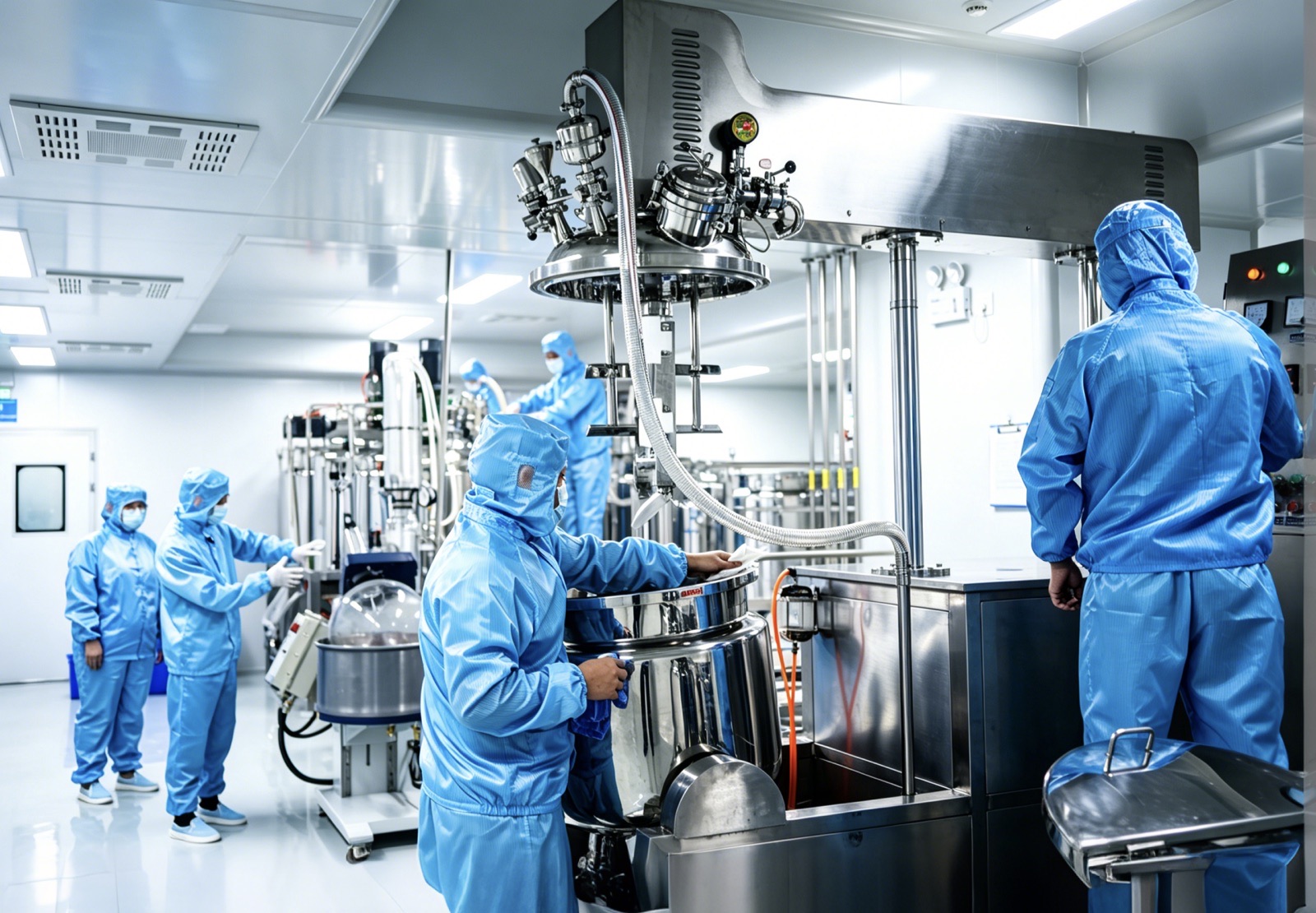
How to verify: request a live virtual factory walk-through and genuine on-site photos. Ask the cleanroom class used for filling and packing your format, and confirm whether filling happens on the manufacturer's own lines. Walk-away risk if the answer is vague: high.
Criterion 5: Documentation and Compliance Support for Your Export Market
Premium wellness brands ship across borders, and each market applies different rules. Under US MoCRA, products must be registered and claims kept within cosmetic boundaries; under EU rules, notification goes through the CPNP portal; and Southeast-Asian markets add their own registration layers. A formulation that is compliant in one region can violate another, and the marketing copy is where most brands trip - "treatment" language turns a cosmetic product into a regulated drug by definition in most jurisdictions.
What to look for: a manufacturer whose team knows these cross-market differences, provides complete export documentation as standard (COA and MSDS at minimum), and actively warns you away from non-compliant claims rather than encouraging exaggerated descriptions. Factories that have shipped the same product concept to multiple regulated markets carry battle-tested documentation templates and claim guidance.
How to verify: request a COA sample and MSDS, then ask two regulatory questions and judge the quality of the written answers. Ask which claims the factory's compliance team would flag on your label before finalization.
Criterion 6: Market-Proven Product Logic, Not Lab-Only Formulas
Here is the criterion most sourcing guides miss, and it is the one that most often predicts launch success. A manufacturer that develops formulas only in a laboratory has never seen them fail - or sell - in front of real buyers. A manufacturer that also runs its own brands at the retail end, through channels such as beauty-salon chains, aesthetic-care brands, postpartum-recovery centers, and monthly-care centers serving women's wellness, closes that loop.
When a factory lives at the retail end too, every formula it offers is shaped by market feedback - what sells, what repeats, what women actually ask for at the counter. Its ODM catalog is not a lab wish-list; it is a record of what is currently moving across the women's-health channels it serves. Licensing that product logic de-risks your launch and shortens time-to-market.
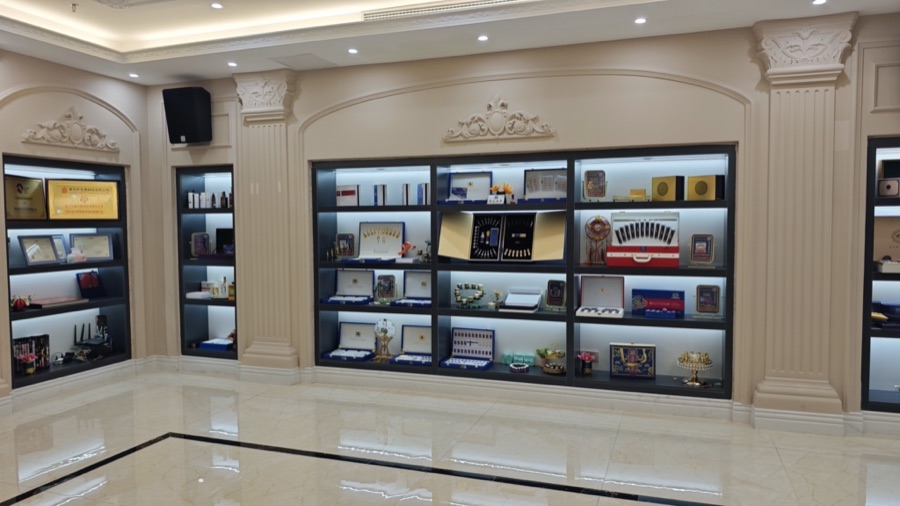
How to verify: ask whether the manufacturer operates its own brands and through which channel types. Ask which of its ODM formulas are top repeat-sellers in those channels right now, and why. Empty answers to "what is selling" tell you the lab has never had to answer to a checkout counter.
Your Screening Checklist at a Glance
| Screen | What a Trusted Manufacturer Can Show You |
|---|---|
| Category depth | Years specifically in intimate-care manufacturing, completed reference projects |
| Formulation | In-house R&D, dedicated mucosal-safe bases, batch pH test reports, ODM + custom OEM |
| Certifications | Full certificate with production scope covering your formats (ISO 22716 / GMPC, third-party verified) |
| Production | Self-owned facility, stated cleanroom class, live virtual tour, real workshop imagery |
| Documentation | COA, MSDS, stability records, claim guidance for your target market |
| Market proof | Own brands selling at retail, catalog shaped by real sell-through data |
A Worked Example: Zhongkang Bainian at a Glance
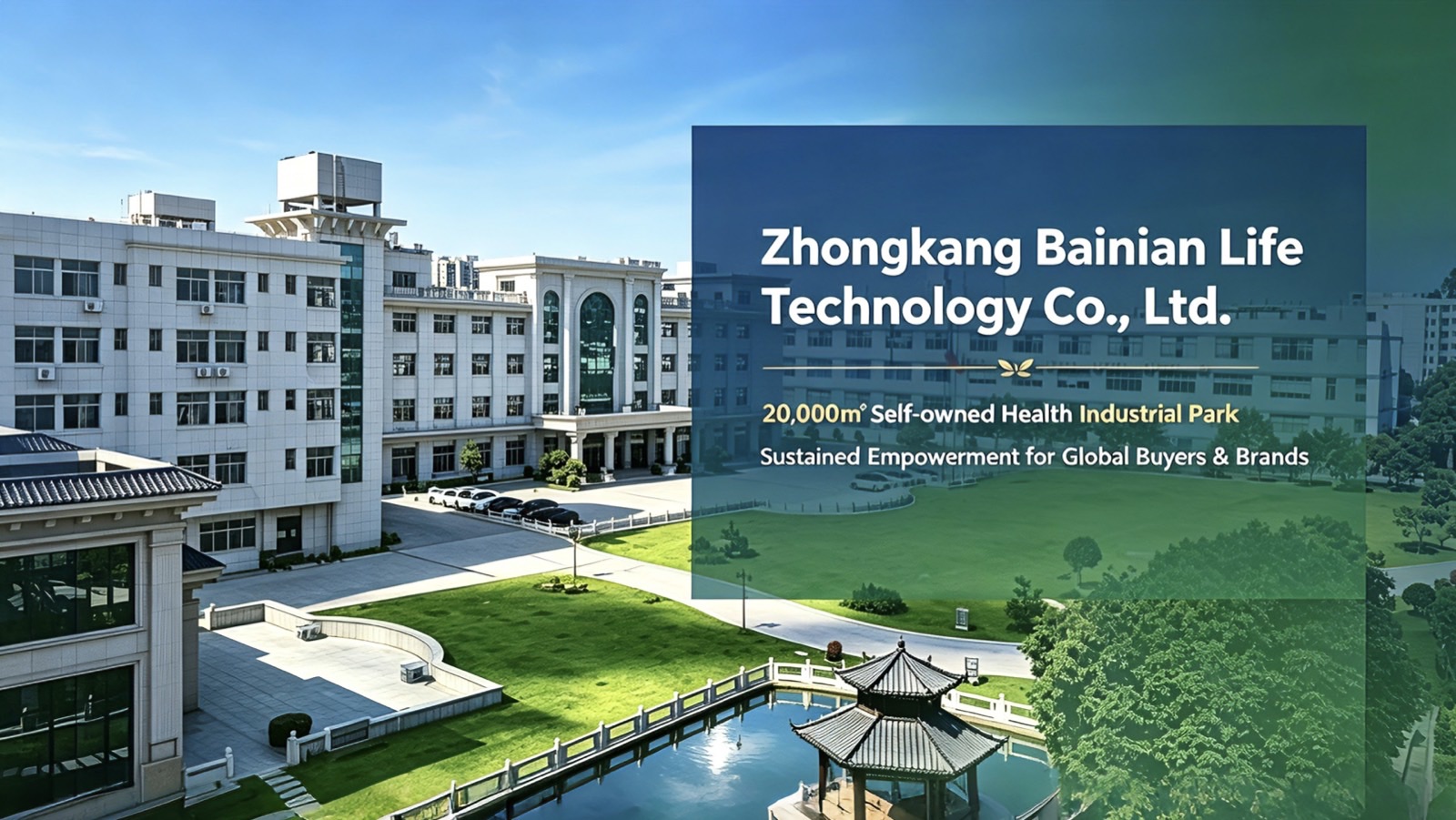
To make the framework concrete, here is how one manufacturer - Zhongkang Bainian, an OEM/ODM intimate-care factory in Quanzhou, China - states its credentials against the same six criteria. The company publishes the underlying documents because screening buyers should be able to read them before a sales call.

| Zhongkang Bainian pillar | The company's own statement |
|---|---|
| 1. Industry Heritage | With 37+ years in feminine intimate-health manufacturing (heritage dating back to 1989), Zhongkang Bainian is a leading Chinese OEM/ODM manufacturer of women's wellness and intimate-care products, serving global brands across liquid, gel, cream, and emulsion formats on a principle of safety, compliance, and efficacy. |
| 2. R&D & Customization | Its in-house R&D lab maintains 300+ natural and botanical formulas. Brands can choose a proven ODM formula or brief a fully custom OEM development. Stability and safety testing are completed in-house, delivering mucosa-friendly formulations that suit premium brand positioning and keep client brands compliant for the long term. |
| 3. Production Capability | Zhongkang Bainian operates a self-owned 20,000 m² facility with class-100,000 cleanrooms, holding SGS-certified ISO 22716 & GMPC with GMP practice aligned to FDA requirements. Certification scope covers liquid, gel, cream, and emulsion intimate-care formats. Dual-track production — separate lines for cosmetic and antibacterial products — runs strict batch-level traceability across the entire production cycle. Full documents are on the certifications page. |
| 4. Delivery Assurance | Flexible capacity ranges from small-batch sampling to full production runs — samples in 7 days, production lead time in 30-60 working days. Standardized project milestones keep every global client on schedule. |
| 5. Global Market Experience | Zhongkang Bainian has served 1,000+ women's health brands worldwide. Its team is familiar with overseas regulatory frameworks, provides complete export documentation (COA, MSDS), and supports brands expanding into North America, the EU, and Southeast Asia. |
| 6. Market-Driven Development | Zhongkang Bainian is not a contract-only factory. It also operates its own brands across beauty-salon chains, aesthetic-care brands, postpartum-recovery centers, and monthly-care centers serving women's wellness. Because it lives at the retail end too, every formula it develops is shaped by real market feedback — what sells, what repeats, what women actually ask for at the counter. Brands that source with Zhongkang Bainian are not picking a lab formula off a shelf; they license a product logic that has already faced real buyers and real sales data. Unlike factories that develop in a lab and never see the shelf, it closes the loop between production and the end consumer — market feedback flows straight back into R&D, so formulas are refined at speed and fit what is actually moving. That lowers launch risk and shortens time-to-market. |
For a deeper look at the company behind these credentials, visit the factory and R&D overview.
Frequently Asked Questions
Q1: How do I verify an OEM/ODM manufacturer is actually certified?
Ask for the full original certificate document, not a logo screenshot, and read the official production scope. Confirm the scope lists your target formats - liquid, gel, cream, or emulsion units. Look for factory-level system certifications such as ISO 22716 and GMPC verified by a third party such as SGS, plus GMP practice aligned to FDA requirements for the US market.
Q2: What makes a formulation safe for a pH-balanced feminine wash?
A formulation built for intimate mucosa rather than repurposed from body care: a pH aligned to the intimate area's natural 3.5-4.5 range, gentle surfactant systems, in-house stability and safety testing, and documented batch pH records. See how a pH-balanced feminine wash is documented on an actual product page as a reference.
Q3: What documentation should an OEM provide before mass production?
At minimum: the full certificate with production scope, a COA sample, MSDS safety sheets, a stability summary from completed projects, and an itemized quotation. Manufacturers shipping to multiple regulated markets can also provide export documentation templates and clear guidance on which marketing claims are allowed in each destination market.
Q4: Can a small premium brand start with a lower MOQ?
Yes, with the right partner. Expect flexible capacity that allows a small first run and scale-up later, samples within about 7 days, and production lead times of 30-60 working days after formulation is confirmed. Treat unusually low MOQs with caution - they can signal repurposed generic bases rather than a custom mucosa-safe formulation.
Q5: Why does it matter if my OEM manufacturer also sells its own brands?
A manufacturer that also runs its own brands at the retail end - through beauty-salon chains, postpartum-recovery centers, or monthly-care centers - validates its formulas against real sell-through and repeat purchases. That market feedback flows back into R&D, which lowers your launch risk compared with a lab-developed formula that has never faced real buyers.
Q6: What is the sample process, and does sampling count toward my MOQ?
A credible OEM sends stock or near-stock formulas within about 7 working days of brief confirmation - you typically cover shipping only, not a sample fee. Custom formula samples (fragrance tweaks, active-ingredient adjustments) take longer, roughly 10-15 working days. A sample order is for testing and does not count toward your mass-production MOQ. Treat a supplier that charges a large, non-refundable sample fee before any real dialogue as a risk signal.
Q7: What MOQ should I expect for a private-label feminine wash?
MOQ is set per production format, not per brand. For example, a liquid feminine wash typically requires around 500 kg per batch. Capsules, gels, creams and sprays each carry their own batch threshold, so ask for the MOQ of your specific dosage form. The practical implication: if your launch plan needs far below one batch, confirm in writing that the supplier offers a scale-down path or that you can combine SKUs toward a batch - and be suspicious of a factory that promises an unusually tiny MOQ on a mucosal-contact product, since that can signal a repurposed generic base rather than a custom mucosa-safe formula.
Key Takeaways
- "Trusted" is a verifiable specification: certification scope, formulation records, workshop access, and delivery honesty can all be proven before you commit budget.
- Screen for category depth in intimate-care manufacturing, not general cosmetics age.
- Read the production scope on the full certificate - a valid certificate that excludes your formats has no practical value.
- Choose a manufacturer that builds dedicated mucosal-safe bases and can show batch pH records, not one that re-labels body-care stock.
- Prefer a partner whose own brands sell at the retail end - its formulas have already passed the market's real test.
Sources
Market data and standards referenced in this article:
- Straits Research - Feminine Hygiene Products Market Size, Share, Growth & Forecast by 2034 (2025). Global market valued at USD 33.88 billion in 2025, projected to USD 66.37 billion by 2034 (CAGR 7.78%).
- ISO 22716:2007 - Cosmetics - Good Manufacturing Practices (GMP). International Organization for Standardization.
- US FDA - MoCRA (Modernization of Cosmetics Regulation Act) requirements for cosmetics facility registration and product claims.
- European Commission - CPNP (Cosmetic Products Notification Portal) registration for cosmetics placed on the EU market.
- SGS - third-party inspection, verification, testing and certification of the ISO 22716 and GMPC quality systems referenced in this article.
Screen Your Feminine Wellness OEM Partner With Confidence
Tell us your target market and first SKU - we’ll show you our certificate scope, batch documentation, and facility before you commit anything.
*This article is for informational purposes only. Market data and regulatory requirements vary by source and by market. Always consult with local regulatory experts before finalizing product specifications for your target markets.*